


Voices That Cost Lives: Hasan Saedi
Human rights activists dedicate their lives to protecting and promoting the basic rights and freedoms of others, speaking out against injustice, discrimination, and violence. According to the United Nations Declaration on Human Rights Defenders (1998), activists have the right to freedom of expression and protection from violence and threats. States are obligated to protect activists from harm, harassment, or intimidation.
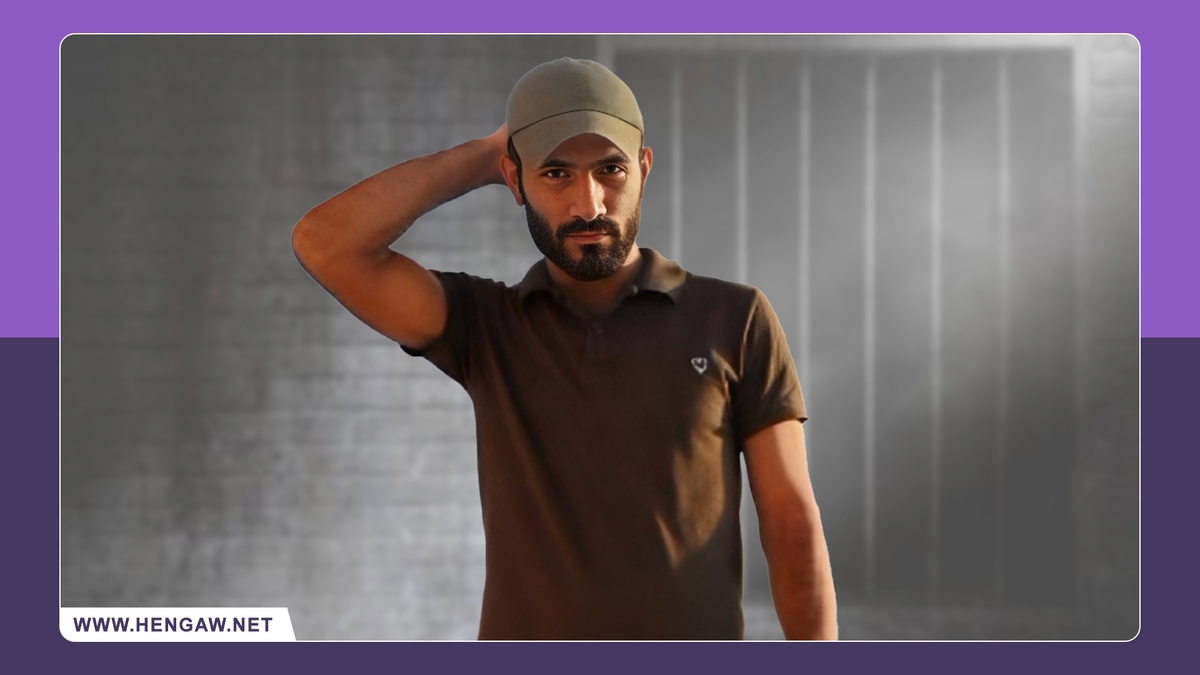
In Iran, however, the reality is tragically different. Instead of safeguarding activists, the Iranian regime often targets them, subjecting them to arrest, torture, and even death for their peaceful activities. One of the most heartbreaking examples is the case of Hasan Saedi, an Arab Ahwazi civil activist, a 33-year-old taxi driver, and the father of two young daughters.
He had previously been arrested for his cultural and civil activities, but this time the regime sought to ensure there would be no “next time.” On Tuesday, October 13, security forces of the Islamic Republic raided Saedi’s home in the Mollasani district of Ahvaz, violently arrested him, and confiscated the mobile phones belonging to him and his family members. Less than 14 hours after being taken into custody, he was declared dead.
“My brother didn’t even make it to the second day,” said Ali Saedi, Hasan’s brother and a former political prisoner now living in the United States. “He was arrested in the morning and died at 10 p.m. that same day. Fourteen hours after his arrest, he was dead.”
The Saedi brothers were in mid-conversation at 5 a.m. when Hasan’s voice changed. “Ali, security forces have surrounded my entire house,” Hasan told his brother, according to Ali’s account to IranWire. When Ali asked if his brother had anything sensitive on his phone, Hasan confirmed he did. Ali urged him to destroy it immediately, and Hasan broke the phone before ending the call.
Hasan’s mother and wife watched in horror as officers handcuffed him. The family recounts that officers beat Hasan and forced him to swallow two fistfuls of unidentified pills, making him drink water to swallow them despite his refusal. Hasan’s mother, who suffers from cancer, was also briefly detained.
The family first learned of Hasan’s death the following morning. Ali Saedi, in the United States at the time, received a frantic call from his sister: “They’re saying Hasan is dead. They said he had a heart attack.” Ali rejects this claim, emphasizing that Hasan was a healthy, cheerful, and hardworking man. The Karun Human Rights Organization confirmed that Hasan Saedi died as a result of severe torture while held in the Intelligence Detention Center of Ahvaz.
The arrest and death of Hasan Saedi are part of a broader pattern of harassment and repression against Ahwazi Arab activists. The Islamic Republic’s regime has a long history of using violence, intimidation, and manipulation to silence dissent while concealing its human rights violations. The use of forced medication during arrests has been documented in Ahvaz before. False accusations, fabricated charges, torture, and fake causes of death are systemic tactics. In Iran’s detention system, the line between arrest and execution can be crossed in less than a day.
The tragic death of Hasan Saedi is not an isolated one; it exemplifies a broader pattern of repression against activists in Iran—particularly Arab activists—who speak out for truth and justice. Remaining silent in the face of such oppression is no longer acceptable.
Reta