



By Mayasa Albawi
January 21, 2026
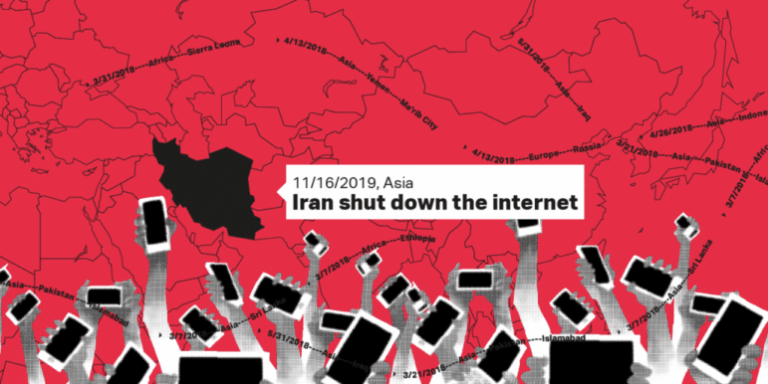
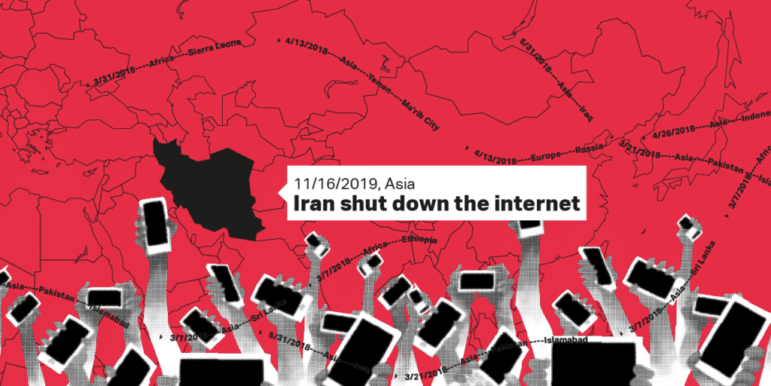
Iran’s decision to cut off access to the global internet is neither a neutral security measure nor a temporary technical response. It is a calculated political weapon one repeatedly deployed to silence dissent, suppress protests, and extinguish public resistance in secrecy. As the nationwide internet blackout enters its second week, the Iranian state appears far less concerned with public safety than with erasing witnesses, controlling the narrative, and reshaping reality itself.
By shutting down the internet, the authorities have effectively silenced millions. The blackout coincides with widespread protests across the country protests the state has sought to delegitimise by rebranding them as “riots, treason, and espionage,” claims made without transparent evidence, independent investigation, or international scrutiny. When the internet is cut, evidence disappears. Videos cannot be uploaded, testimonies cannot circulate, and victims are denied visibility.
Fatima Mehajerani, the regime’s spokesperson, has suggested that citizens should not expect the restoration of international internet access anytime soon, indicating that global connectivity may remain blocked until after Nowruz 1405 (March 2026). This is not an emergency response but a prolonged information siege. Entire regions remain digitally isolated cut off from the outside world and from one another. The goal is clear: to prevent coordination among protesters, block the flow of information, and deny the world access to real-time evidence of state violence.
If the regime’s claims were truthful if the events were genuinely “riots, treason, and espionage” why refuse international internet access? Why block journalists, human rights organisations, and independent observers from seeing the reality for themselves? Why prevent reports from leaving Iran while insisting that the public rely exclusively on state-controlled media?
The answer is simple: transparency is dangerous to authoritarian power.
Alongside the blackout, Iranian authorities have intensified efforts to eliminate alternative channels of communication. Satellite-based internet services, particularly Starlink, have become primary targets. Filterban, a digital rights organisation, reports that identifying and disabling Starlink terminals is now a priority for regime-affiliated agencies, with state-linked companies developing systems to detect and disrupt satellite traffic. This marks a shift from conventional censorship to sophisticated information warfare. Iran is no longer merely censoring content—it is attempting to eliminate communication itself.
This strategy places Iran among the most repressive states in the world in terms of digital control. Few regimes are willing to shut down nearly all forms of communication to crush protests in total secrecy, only to later deny responsibility by claiming that no political executions have occurred and that no political prisoners exist. In such contexts, silencing communication becomes a means of erasing accountability.
These developments point to a disturbing trajectory one that increasingly resembles North Korea’s model of total digital isolation. In North Korea, access to the global internet is virtually nonexistent for ordinary citizens. Only a tightly controlled elite is permitted limited access under constant surveillance. Unauthorized exposure to foreign information can result in imprisonment, forced labour, or worse. Instead of the open internet, citizens are confined to Kwangmyong, a closed domestic network offering only state-approved information.
Iran’s repeated internet shutdowns, criminalisation of circumvention tools, and aggressive targeting of satellite services indicate an ambition to construct a national internet similar to North Korea’s closed digital system. While Iran has not yet fully sealed itself off, the direction is unmistakable.
The consequences are severe. Prolonged internet shutdowns damage the economy, isolate citizens from the global community, suppress freedom of expression, and violate fundamental human and digital rights. More dangerously, they allow the state to rewrite reality transforming peaceful protest into “terrorism,” victims into criminals, and silence into consent.
If this trajectory continues, Iran risks turning its already restricted internet into a fully enclosed system where access to global information becomes a privilege reserved for the powerful rather than a basic right. At this point, expressions of “concern” and ritual condemnations from the international community are no longer sufficient. Silence and hesitation amount to complicity when thousands of young people are being killed, imprisoned, or disappeared behind a digital curtain.
What is needed now is not rhetoric but action: coordinated diplomatic pressure, support for secure communication technologies, targeted sanctions against those responsible for digital repression, and accountability mechanisms that recognise internet shutdowns as violations of fundamental human rights. Every day the internet remains dark, lives are lost in silence. The cost of inaction is measured not in statements issued, but in young lives erased.