
Why Regime Change Has Not Yet Been Achieved in the Iranian Context: A Structural Analysis
For decades, a dominant assumption underlying regime change has been straightforward: remove the leader, and the system will collapse. This belief informed interventions such as the Iraq War and the Libya intervention, where the fall of a central figure precipitated the rapid disintegration of state structures. However, Iran differs fundamentally from these cases. Treating it as analogous to them is a significant analytical misjudgement.
To assess the prospects for regime change in Iran, it is essential first to understand how the system operates. The Iranian political order is not cantered on a single individual; rather, it is sustained by a complex and institutionalized network of political, military, economic, and religious power structures. Authority is distributed across these interconnected institutions, collectively ensuring continuity and stability. As a result, the regime’s resilience lies in its structural composition rather than in any individual leader.
At the core of this system is the Islamic Revolutionary Guard Corps (IRGC), which serves not only as a military organization but also as a significant political and economic force. Often described as a “state within a state,” the IRGC plays a central role in maintaining institutional continuity across different leadership configurations. The system is therefore designed to absorb shocks, adapt to pressure, and reorganize rather than collapse. Consequently, even the removal of key figures, including the Supreme Leader, would not, in itself, dismantle the broader structure.
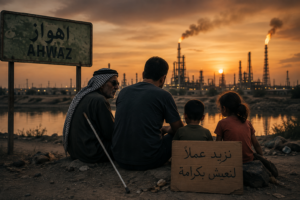
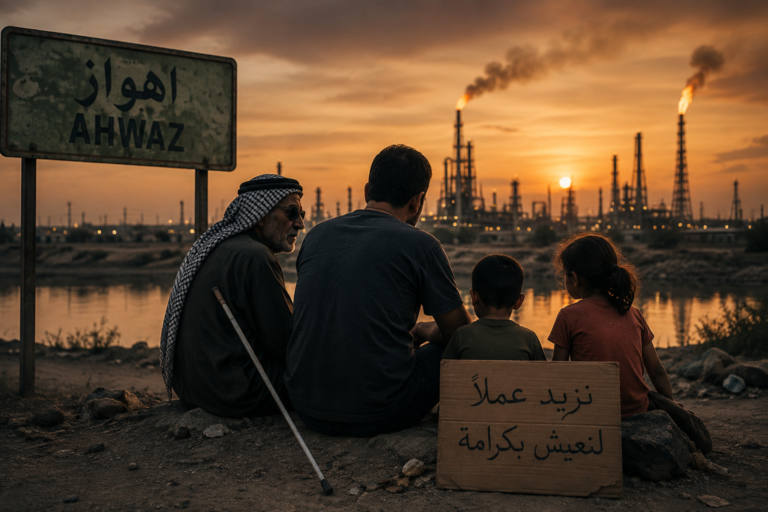
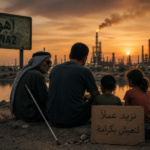
At the same time, the challenge of political transformation in Iran lies not only in the resilience of the current system but also in the absence of a coherent and inclusive alternative capable of replacing it. Despite years of widespread discontent, no unified opposition has emerged that adequately represents Iran’s ethnic, linguistic, and religious diversity, including Arabs, Kurds, Baloch, Azeris, and others. On the contrary, opposition spaces often reproduce dominant cultural narratives that prioritize certain identities over others. In practice, this dynamic places pressure on minority groups to conform rather than enabling their meaningful inclusion within a genuinely pluralistic framework.
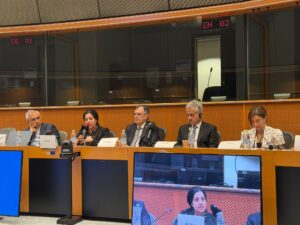
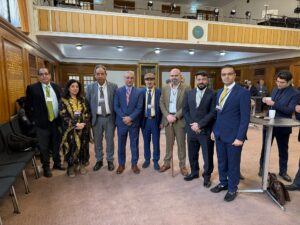
For example, at a gathering in Munich on 13 February 2026, an Arab Ahwazi speaker was interrupted and asked to change his greeting from “Salam bar hameh” (“peace/greetings to everyone”) to “Dorood” (a Persian greeting meaning “salutation” or “hail”). Such moments serve as symbolic assertions of dominance and reflect a broader tendency to privilege certain identities often shaped by dominant Persian cultural norms over others. In this context, specific linguistic forms are treated as more legitimate markers of political belonging, reinforcing unequal perceptions of inclusion and highlighting deeper issues of hierarchy, cultural authority, and exclusion.
Similarly, slogans such as “I am Persian, I am not Muslim” illustrate how identity can be constructed in ways that define boundaries of belonging while reinforcing exclusion rather than fostering inclusivity. Amid such dynamics of perceived ethnic hierarchy and cultural superiority, the emergence of a cohesive and representative alternative to the current regime remains limited, thereby constraining the prospects for meaningful regime change.
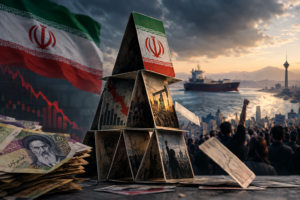
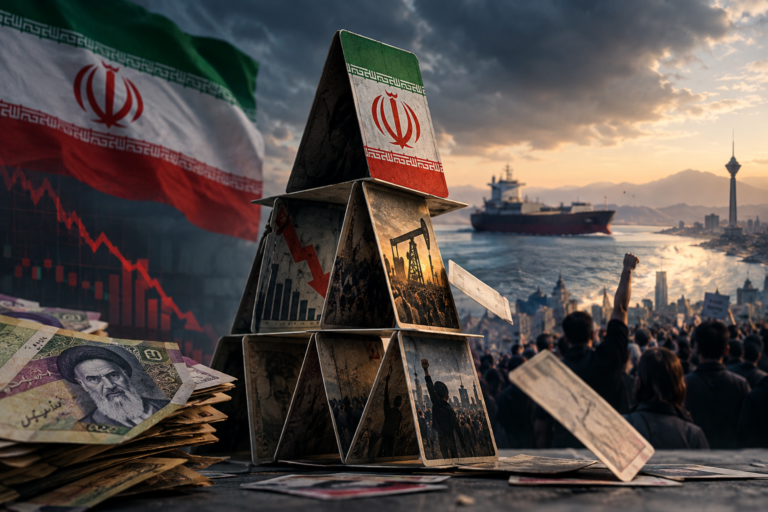
Regarding the effectiveness of external pressure, such as sanctions and diplomatic isolation these measures alone have proven insufficient to bring about substantive political transformation. Iran has faced sanctions for approximately 45 years, since 1979, with the most intensive and comprehensive phase beginning around 2006. While these measures have weakened the country economically and contributed to periodic uprisings driven by inflation and broader hardship, they have not resulted in systemic change.
In the absence of a unified and inclusive opposition capable of coordinating and sustaining such movements and without a clear vision for a post-regime political order these uprisings have ultimately been suppressed through state repression. Sanctions and diplomatic isolation may generate the initial conditions for unrest and mobilization; however, without an opposition that genuinely reflects Iran’s social and ethnic diversity and addresses the varied political, economic, and cultural demands of its population, the conditions necessary for sustained collective action remain unmet. As a result, trust and coordination across different communities are weakened, significantly reducing the likelihood of meaningful transformation.
Another critical factor in assessing the prospects for regime change is the degree of cohesion within the ruling elite. Political science research suggests that regime change in authoritarian systems rarely occurs solely due to popular protest or external pressure. Instead, it often depends on fractures within elite networks, as regimes are typically sustained by cohesive alliances among political, military, and economic actors. When these elites remain unified, the system tends to endure; when they fragment, the system becomes vulnerable.
In the Iranian context, elite networks particularly within the IRGC, are highly institutionalized and deeply intertwined with the continuity of the state. Elite cohesion is reinforced not only by ideological alignment but also by dense networks of institutional loyalty, economic interdependence, and shared exposure to security risks. These overlapping incentives strengthen coordination, reduce the likelihood of defection, and increase the costs associated with internal division. From a theoretical perspective, elite fragmentation is most likely to emerge when these incentive structures begin to diverge under conditions such as resource scarcity, leadership uncertainty, or declining institutional legitimacy.
In sum, regime change in Iran should not be understood as a singular event achievable within a short timeframe. Rather, it is a cumulative process dependent on the alignment of multiple factors, including a unified and representative opposition, sustained societal mobilization, institutional strain, elite fragmentation, and external pressure. At present, such alignment has not materialized. Until it does, the system is likely to continue demonstrating the resilience it has exhibited for decades adapting to pressure rather than collapsing under it.
Retaj
29 March 2026