


Between Gorbachev and Khomeini: Echoes of Systemic Crisis in Iran and the Soviet Union
By Mayasa Albawi
May 30, 2026
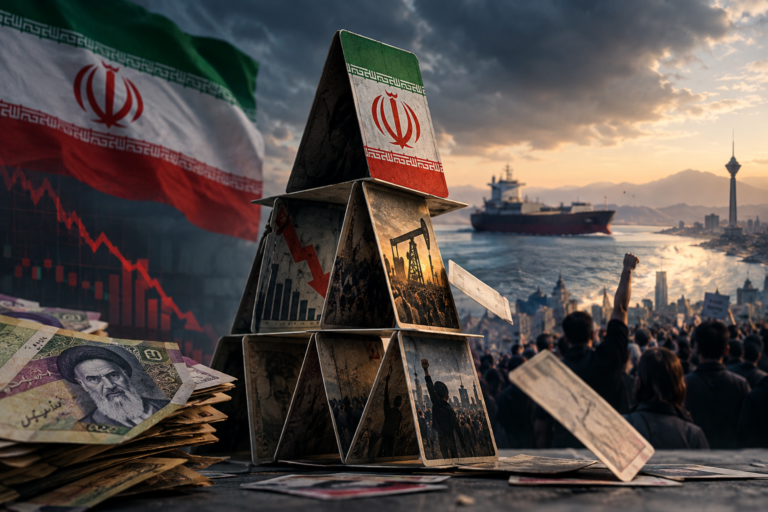
History has repeatedly shown that no empire or powerful nation remains dominant forever. Great powers rise through economic strength, military influence, political unity, and ideological control, yet they often collapse because of the very systems that once sustained them. From the Roman Empire to the Soviet Union, decline rarely happens overnight. Instead, it develops gradually through economic crises, political instability, social unrest, corruption, and leadership failures. Today, a growing number of observers are asking an increasingly serious question: Is Iran becoming the next Soviet Union?
Although Iran and the Soviet Union differ in many ways, the similarities between present-day Iran and the USSR during its final years are becoming difficult to ignore. Economic hardship, military pressure, political fragmentation, and widespread public dissatisfaction are all warning signs that have historically preceded major political collapse. While history never repeats itself in exactly the same way, it often follows familiar patterns.
One of the main reasons behind the collapse of the Soviet Union was economic failure. Years of inefficient central planning, low productivity, corruption, shortages, and enormous military spending gradually weakened the Soviet economy. By the 1980s, falling oil prices had severely damaged government revenues, while ordinary citizens faced declining living standards and growing frustration. The economic crisis slowly eroded public confidence in the Soviet state.
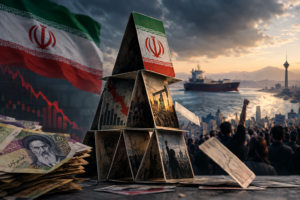
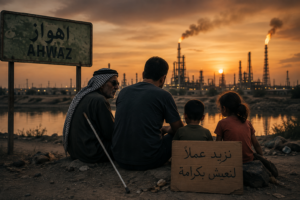
Iran today faces strikingly similar economic conditions. Years of sanctions, inflation, currency collapse, unemployment, and economic isolation have placed enormous pressure on the population. The cost of living continues to rise while wages remain insufficient for many families. The Iranian rial has lost much of its value, and many citizens struggle to afford basic necessities. Much like the Soviet Union in its final decade, Iran’s economic stagnation is weakening public trust in the government and generating deep social frustration.
Military pressure and regional conflict also played a major role in weakening the Soviet Union. The Soviet–Afghan War became a costly and exhausting conflict that drained resources, damaged morale, and exposed structural weaknesses within the Soviet system. Instead of strengthening Soviet influence, the war accelerated internal decline and increased public dissatisfaction.
Iran today faces its own form of military and geopolitical strain. Ongoing tensions involving the United States and Israel, regional conflicts, security expenditures, and international isolation continue to place heavy pressure on the Iranian state. Maintaining regional influence has become increasingly costly at a time when the domestic economy is already under severe strain. History has often shown that prolonged external pressure weakens states internally, particularly when economic conditions are already fragile.
Another important similarity lies in the growth of internal protests and political unrest. During the late 1980s, the Soviet Union experienced increasing protests, nationalist movements, and demands for political reform. Many citizens rejected repression and began openly challenging the system. As dissatisfaction spread, the Soviet government gradually lost its ability to maintain unity and authority.
Iran has experienced repeated waves of protests in recent years, including the “Woman, Life, Freedom” movement and other demonstrations driven by economic hardship, corruption, and political repression. These protests reflect more than temporary anger; they reveal a deeper crisis of legitimacy. When citizens lose fear and begin publicly challenging the state despite severe consequences, it signals a serious weakening of political control.
The Soviet Union also suffered from growing divisions within its leadership. Reforms introduced by Mikhail Gorbachev, particularly glasnost and perestroika, unintentionally exposed the deep weaknesses of the Soviet system. As different institutions and leaders pursued conflicting agendas, the image of a unified and stable government began to collapse.
Similar signs have been observed during the recent escalation of tensions between Iran and the United States, where questions of internal division have increasingly emerged within Iran today. Political and military authorities have at times appeared misaligned, particularly during periods of regional tension and crisis. Contradictory statements, inconsistent strategies, and visible tensions between political leadership and military decision-making have raised concerns about coordination and authority within the ruling establishment. When governments begin to show internal fragmentation, public confidence weakens further.
Perhaps the most important similarity between the Soviet Union and Iran is the gradual loss of public trust. In both cases, many citizens became increasingly frustrated with the government’s inability to ensure economic stability, political openness, and a hopeful future. Governments can survive sanctions, wars, and protests for a time, but surviving the loss of public belief in the system itself is far more difficult.
Of course, Iran is not identical to the Soviet Union. Iran is not a global superpower controlling a vast multinational empire, nor does it occupy the same geopolitical position. Its political structure, ideology, and historical context are different. However, historical collapse does not require identical conditions. What matters are the patterns and warning signs.
The same factors that weakened the Soviet Union—economic exhaustion, military strain, political unrest, internal divisions, and declining public trust—are increasingly visible in Iran today. Whether these pressures will lead to reform, prolonged instability, or eventual systemic breakdown remains uncertain. Yet history suggests that when multiple crises emerge simultaneously and governments fail to adapt effectively, decline becomes increasingly difficult to prevent.
The question is no longer whether warning signs exist. The real question is whether Iran’s leadership will recognize and respond to them before history repeats itself once again. The Soviet Union did not collapse because of a single war, a single protest movement, or a single political mistake; it collapsed when economic failure, political fragmentation, military pressure, and public dissatisfaction converged over time, weakening the state beyond repair. Iran today appears to be more than ever walking a similar path.
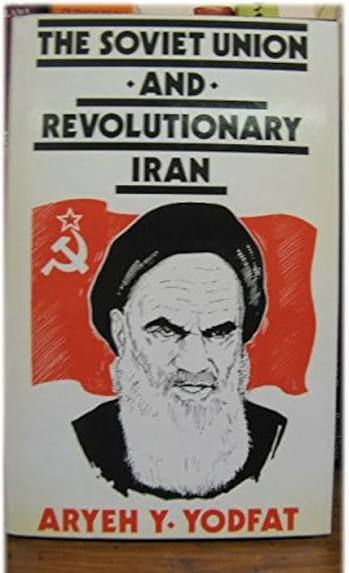
Against this backdrop, an ironic historical question emerges: would Ruhollah Khomeini, if he were observing the present trajectory of Iran today, have written a similar warning letter to the current leadership, as he once did to Mikhail Gorbachev, seeing signs of an approaching systemic decline—or has the moment for such warnings already passed? And if so, will Iran’s leadership respond differently from the late Soviet leadership under Gorbachev, whose reforms came too late to prevent collapse? Whether these warning signs will be recognized in time remains uncertain; only history will tell whether they are acted upon—or remembered too late.