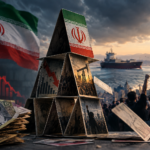

Collapse of a House of Cards: Is the Iranian Regime Approaching a Breaking Point?
By Mayasa Albawi
September 30, 2026
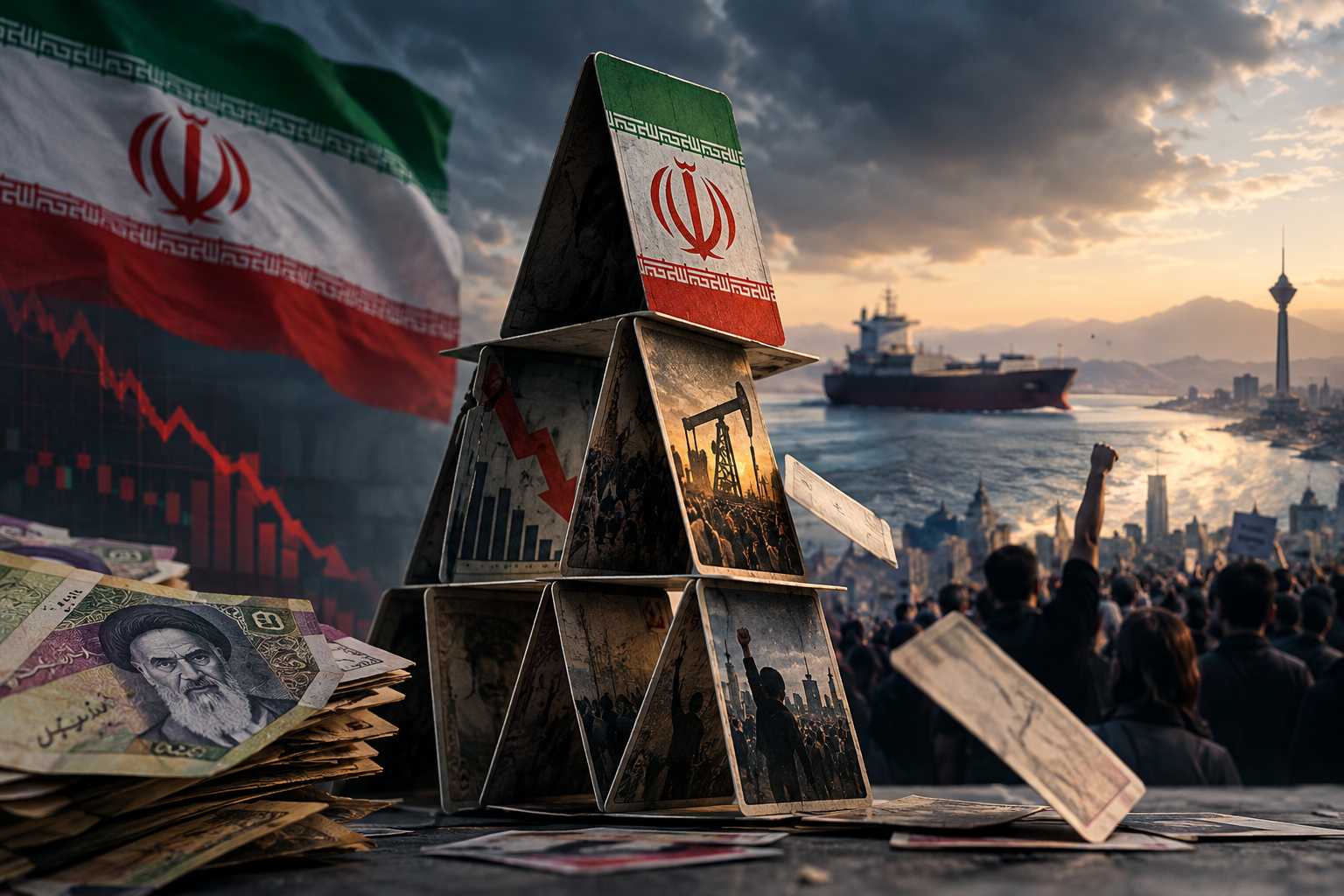
Iran is facing a convergence of pressures that is testing the resilience of the Iranian regime. Three developments stand out: the sharp deterioration of the economy, mounting pressure on oil exports and the Strait of Hormuz, and the return of protests combining economic, social, and political grievances. Taken together, these developments raise questions about how much pressure the regime can absorb.
The first pressure is economic. On September 29, the free-market exchange rate crossed 2.5 million rials per U.S. dollar, or about 250,000 tomans, setting another record low. The rial is Iran’s official currency, while the toman is the commonly used unit; one toman equals 10 rials. The depreciation is more than a currency-market statistic: it raises the cost of imported food, medicine, machinery, and other essentials while eroding household savings and purchasing power. High inflation compounds the effect, creating a cycle in which currency weakness raises costs, higher prices reduce purchasing power, and economic hardship fuels wider public dissatisfaction.
The pressure on ordinary Iranians is also being amplified by the growing isolation of the country’s aviation sector. New U.S. sanctions have led several countries to suspend or restrict flights operated by Iranian airlines. The United Arab Emirates suspended all Iranian airline flights, while Iraq suspended Iranian airline services at several airports, including Baghdad, Najaf, Erbil, and Sulaimaniyah, before an exemption allowed some services to resume. Oman, Georgia, and Azerbaijan have also restricted or suspended Iranian airline operations. Turkey has not imposed a blanket ban on Iranian airlines, but some Iranian carriers have suspended services there, while Turkish Airlines has suspended its own flights to Iran.
For ordinary Iranians, the consequences go beyond inconvenience. Fewer international routes mean higher travel costs, longer journeys, and greater difficulty for families, students, businesses, and pilgrims who depend on regional air connections. Some passengers have been forced to consider costly overland alternatives, while the loss of major regional hubs further reduces Iran’s connection to the outside world.
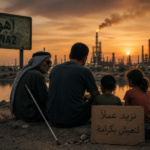
The second pressure comes from oil and the Strait of Hormuz. U.S. sanctions and the blockade have sharply restricted Iran’s ability to export crude, putting pressure on an important source of foreign-currency revenue. The disruption compounds the effect of sanctions by making it more difficult for Iran to sell oil and generate the foreign currency needed to support government finances and imports. At the same time, negotiations over reopening the Strait remain underway, with Qatar acting as a mediator.
The third pressure is protest. On September 28, students at Allameh Tabataba’i University in Tehran protested over living conditions, compulsory hijab rules, and the treatment of imprisoned students. Similar economic grievances have also emerged among retirees and other groups. What makes the protests significant is the way different concerns increasingly overlap: inflation and the cost of living can intersect with demands over personal freedoms, university conditions, and political restrictions. Whether these grievances remain fragmented or begin to reinforce one another is a key question for the regime’s ability to contain unrest.
The Iranian regime has survived severe economic crises, external conflicts, and waves of protest before, and its institutions retain substantial coercive and administrative capacity. But the combination of a rapidly weakening currency, growing isolation, restrictions on oil exports and maritime trade, and renewed protests creates a more interconnected challenge.
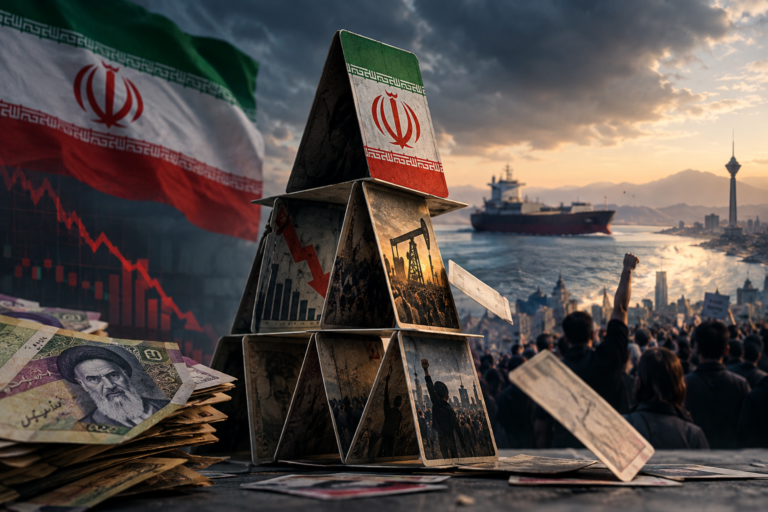
The question, therefore, is not simply whether Iran is experiencing another economic crisis or another wave of unrest. It is whether these pressures are beginning to reinforce one another in a way that could weaken the foundations of the Iranian regime. Are we witnessing the collapse of a house of cards—or another period of severe pressure that the regime will ultimately manage to survive?